
Stride Rite
Soft Motion Artie First Walker
high-top sneaker · hook-and-loop strap; elastic laces
Amazon link availableToddler shoe guide
Try a gradual, non-coercive routine when a new walker dislikes shoes, with fit checks, short sessions and clear reasons to pause.
When a new walker does not like wearing shoes, first rule out obvious pressure, rubbing and a difficult opening. Then introduce the pair in brief, low-pressure indoor sessions tied to a familiar activity. End before frustration builds, remove the shoes, inspect the feet, and try again later only if the fit still appears comfortable. Shoes do not teach walking, and refusal should not be treated as disobedience.
A child who has mostly moved barefoot or in socks is encountering several new sensations at once: an upper around the foot, a sole under it, a closure sound and a different amount of grip. Pulling at the shoe, sitting down or asking for removal can simply communicate that the experience is unfamiliar. It can also signal pressure or rubbing, so the first task is observation rather than persuasion.
Choose a time when nobody needs to leave the house. A rushed doorway turns a small experiment into a contest. Keep the first goal modest: the child allows one properly fitted shoe to be placed and removed calmly. Walking across a room is not required on the first attempt.
Open the closure fully instead of pushing the foot through a partly fastened shoe. Check that the heel reaches the back, the toes are not curled, and the sock has not bunched. Fasten the shoe so it feels secure without pulling the upper tightly across the instep. Compare both feet because one may be larger or shaped differently.
Let the child stand if able, then watch the heel and forefoot during a few supported steps. Remove the pair immediately if there is sharp distress, a visible pinch, skin catching at the opening or repeated loss of balance that begins with the shoes. A routine cannot make an unsuitable shape become appropriate.
Session one can be simple exploration: place the shoes nearby, name them, open the straps and let the child handle them. In session two, put on one shoe for a few calm moments while seated, then remove it. Session three uses both shoes while sitting or standing with support. Session four adds a favorite stationary activity, such as looking at a board book. Session five includes a short walk on a clear indoor surface.
These are stages, not daily deadlines. Repeat an easy rung when the child remains interested, and step back when resistance increases. A successful session might last less than a minute. Ending while the child is still regulated creates a more useful association than extending wear until the shoes become the focus of a struggle.
Use the same neutral phrase and sequence: socks, shoes, one familiar activity, then shoes off. A picture near the door or letting the child choose between two acceptable sock pairs can add predictability without making fit negotiable. Keep the closure sound and fastening pace gentle if those sensations draw a strong reaction.
Avoid distracting the child so completely that useful signals disappear. The purpose is not to sneak extra wear time into the day. You want to learn whether the child can move comfortably while aware of the shoes. Calm acknowledgement—“you want them off; we are checking your feet”—is clearer than promising a reward for enduring discomfort.
After each trial, note what happened before the refusal. Trouble only during entry points toward the opening, sock or fastening sequence. Distress once standing may relate to the feel of the sole or an unnoticed fit issue. A shoe that twists, falls off or causes toe catching needs reassessment rather than another tolerance session.
Remove both shoes and inspect the toes, sides, heel and top of each foot. Look for a consistent rub location, compressed toes, swelling or broken skin. Also notice whether the child returns quickly to ordinary movement after removal. Keep brief notes so repeated patterns are easier to see than they are during a busy routine.
If novelty appears to be the main issue and every fit check remains quiet, continue with short sessions and increase duration gradually. If refusal is linked to one pair, compare its shape and closure with another appropriate option rather than assuming the child rejects all footwear. For an outdoor need, postpone the outing or use a safe alternative setting rather than forcing a distressed child through practice.
Pause and ask a pediatrician or qualified foot-health professional for guidance when the child appears to be in pain, has swelling or skin injury, persistently limps, or rejects weight-bearing with or without shoes. A sudden change deserves more attention than a stable preference for bare feet indoors.
Once the child moves normally during several calm indoor trials, choose a brief, low-stakes outing with an easy way to return. Bring the socks used during fitting and avoid debuting new shoes during a long daycare day, travel day or special event. Check the fit again before leaving and after returning.
The milestone is not a particular number of minutes. It is a repeatable routine in which the shoes go on without force, the child can use ordinary movement, and the feet look comfortable afterward. Continue offering safe barefoot time where appropriate; footwear is protection for conditions that need it, not a training device for walking.
Reviewed model starting points
These model families link to Amazon listings. Check the selected size, width and color because availability and features can vary.
Stride Rite
high-top sneaker · hook-and-loop strap; elastic laces
Amazon link available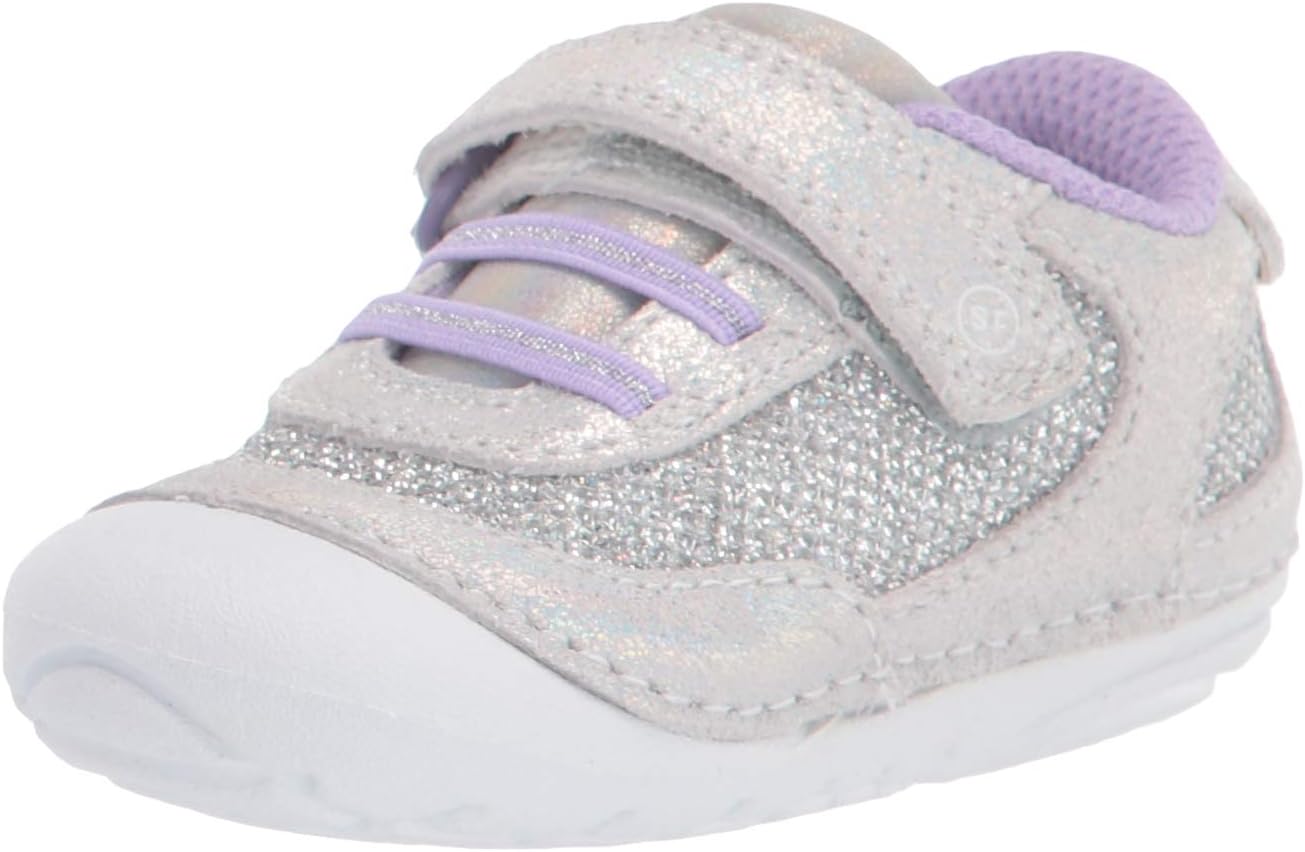
Stride Rite
sneaker · hook-and-loop strap; elastic laces
Amazon link available
Stride Rite
sneaker · hook-and-loop strap
Amazon link availableIt may last only a few calm moments. Stop before distress builds, inspect the feet, and increase time only when repeated short trials remain comfortable.
First check fit and the child's reaction. A gradual reintroduction is more informative than forcing wear, especially when you do not yet know whether something rubs or presses.
Not automatically. Indoor needs depend on the surface and household conditions. Shoes are mainly useful when protection or traction is needed for the setting.
Measure and inspect both feet and both shoes. One foot may be larger, a sock may be bunched, or one shoe may have a localized rub or manufacturing difference.