
Stride Rite
Soft Motion Artie First Walker
high-top sneaker · hook-and-loop strap; elastic laces
Amazon link availableFit & sizing guide
See why toddler shoe size by age is only a starting estimate and what information makes a gift or replacement more likely to fit.
A toddler shoe size-by-age chart is useful for choosing where to begin, not what to buy. Children of the same age can have different foot lengths, widths, and growth patterns, while brands use different shapes and charts. Measure both feet, use the longer measurement, and confirm the exact model while the child stands and walks.
An age chart can help a new shopper distinguish baby, toddler, and larger children’s departments. It can also serve as a rough reasonableness check when a caregiver remembers neither the label nor the measurement. Its value ends there. It cannot predict a particular child’s size, width, instep, heel shape, or preferred fit.
Age bands are especially weak at their boundaries. Growth is uneven, and feet do not change on birthdays. Some children stay in one labeled size for a while and then change quickly. Others need different labels across brands at the same time. Presenting a chart as a promise turns a broad population estimate into personal advice it cannot support.
Keep a simple dated log: right foot, left foot, socks used, current model, current labeled size, and any fit notes. Use heel-to-longest-toe measurements taken while standing. The timeline shows the child’s own pattern and makes it easier to notice when an old size recommendation is stale.
The log need not be elaborate. A note in a phone is enough. Record whether the longer foot switched sides, whether a wide model was needed, and when a fastening began to feel limited. At the next purchase, these facts are more actionable than searching for another age table.
For a first walker, focus first on whether a shoe is needed for the surface and activity, then measure. For a daycare replacement, inspect the current pair and ask staff or caregivers about slipping, removal, or rubbing. For seasonal boots, measure with the intended socks and account for lining through the model chart. For a gift, request a current label photo and measurement, then prioritize easy returns.
Notice that age is not the decisive input in any scenario. The intended use changes construction needs, while measurement and on-foot observation settle sizing. This keeps the process specific without pretending that one shoe is universally “best” for an age group.
Measure at the end of the day on a hard floor with the normal socks. Check both feet and use the longer result. On each candidate product page, confirm sizing market, chart date if provided, and whether the values represent foot length or shoe dimensions. Follow the brand’s allowance instructions without adding a second cushion.
Then filter for the child’s foot shape and routine: suitable width, enough opening for the instep, secure adjustable fastening, and construction appropriate for indoor play, playground use, water, or cold weather. This produces a manageable shortlist rooted in actual needs rather than age-based merchandising.
Try shoes indoors with both feet fully fastened. Check the widest-foot alignment, toe room according to the maker, heel security, and pressure across the top. Watch walking, running if appropriate, turning, squatting, and standing up. A shoe that repeatedly slips, catches, twists, or changes the child’s usual movement needs reassessment.
Inspect the feet after the trial. Persistent redness, blisters, nail pressure, or complaints matter even when the age chart and printed label look correct. Toddlers may communicate discomfort by pulling at shoes or refusing them, so observe behavior as well as verbal answers.
Do a quick fit check about monthly during active toddler years, and sooner after a growth spurt or when socks change. Recheck if toes approach the front, the upper bulges, the closure reaches its limit, or heel behavior changes. Do not wait for holes in the outsole; fit can be lost before a shoe is worn out.
Age still has one modest role: it reminds adults that rapid growth is common in early childhood. But the next action should be a measurement and fit inspection, not an automatic move to the size listed beside the next birthday. Seek professional advice for persistent pain, limping, swelling, skin injury, or a known clinical concern.
When discussing size with relatives, daycare staff, or another caregiver, phrase age information as a rough range rather than a fact about the child. “This chart suggests a place to start, but we measured” communicates the limitation. Sharing the dated measurement, model, and fit notes reduces the chance that someone later orders from the age label alone.
Retail filters labeled by age can still save time. Use them to assemble candidates, then reopen the product-specific sizing information for each one. If a marketplace listing combines several models on one page, make sure the visible chart belongs to the selected variant. A generic image in the listing gallery may not be enough.
The same discipline applies after a successful purchase. Do not announce that the child is permanently a particular age-size combination. Record that this model in this size fit on this date with these socks. That precise statement remains useful without pretending that children or brands are standardized.
For daycare shoes, invite a second observation after several normal play sessions while still checking the return terms. Staff may notice a heel coming loose during running or a fastening the child cannot manage independently. Combine that report with the home skin and movement check; neither age nor convenience should override a poor fit.
Reviewed model starting points
These model families link to Amazon listings. Check the selected size, width and color because availability and features can vary.
Stride Rite
high-top sneaker · hook-and-loop strap; elastic laces
Amazon link available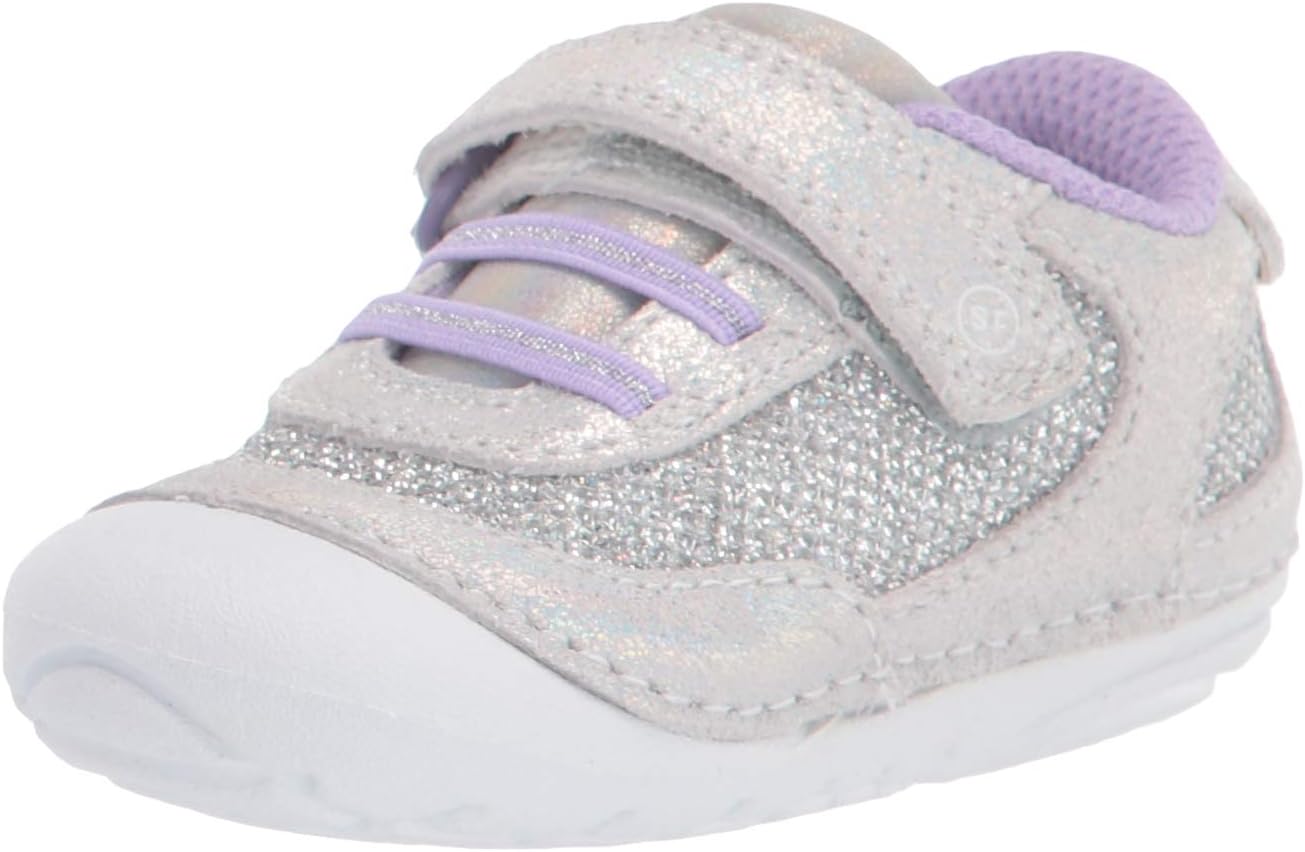
Stride Rite
sneaker · hook-and-loop strap; elastic laces
Amazon link available
Stride Rite
sneaker · hook-and-loop strap
Amazon link availableIt can describe broad ranges, but it cannot reliably choose a size for an individual child. Measurement and model-specific fitting are required.
Fit should be based on each child’s measured feet and shoe shape, not a gendered age prediction.
A monthly fit check is a practical routine for active toddlers, with earlier checks when growth or discomfort signs appear.
Ask for the current brand, model, size-label photo, recent measurement, and fit notes. Choose an easy-return option if uncertainty remains.
Product details can change. Confirm the current exact model before buying.