
Stride Rite
Soft Motion Artie First Walker
high-top sneaker · hook-and-loop strap; elastic laces
Amazon link availableStyles and Materials
Compare canvas and mesh toddler sneakers by upper construction, airflow, cleanup, drying, abrasion points, fit and daily routine rather than fabric name alone.
Canvas and mesh describe parts of an upper, not the whole shoe. Choose between exact pairs after comparing the weave, overlays, lining, closure, outsole and care instructions.
Canvas is commonly a woven textile with a relatively continuous surface, while mesh usually uses a more open knitted or woven structure. Those broad descriptions can suggest different experiences with airflow, dust, stains, and flexibility, but they do not tell you how an entire sneaker behaves. A mesh panel covered by synthetic overlays may feel unlike a mostly mesh upper. A lined canvas shoe may differ from an unlined one. Toe caps, heel counters, padding, and sole units can outweigh the fabric label.
Start with the routine. If the pair will face dusty playground mulch and visible food marks, inspect how easily loose material reaches or clings to the upper and what cleaning the maker permits. If long warm indoor days are the main concern, inspect ventilation across the whole shoe rather than assuming any mesh is automatically cool. Compare two exact constructions, not abstract swatches.
Draw four boxes labeled warm and dry, warm and messy, cool and dry, and wet risk. Put the toddler's most common shoe hours into those boxes. A summer daycare may land in warm and messy because the pair moves between an air-conditioned room, mulch, paint, and snack spills. A stroller-heavy city day may be warm and dry. The crowded box should guide the comparison; a rare special condition should not dominate an everyday purchase.
Now score each exact candidate only on information you can verify: upper and lining materials, amount of overlay coverage, closure, sole, care method, and expected recovery time under those instructions. Canvas may offer a simpler surface on one shoe, while another canvas weave holds marks. Mesh may release heat and moisture differently, yet fine debris can enter open structures or become lodged in them. The grid turns those tradeoffs into a routine decision without making universal material claims.
Hold the unoccupied shoe under ordinary room light and inspect where the upper appears open, backed by lining, or covered. Do not perform destructive stretch or breath tests. Product descriptions may identify breathable panels, but that language is not a measurement that lets you rank unrelated shoes confidently. Sock material, lining, padding, activity, temperature, and fit also affect how the foot environment feels. A spacious-looking mesh pattern can still sit over a dense backing.
For warm routines, favor evidence you can use: the location of open panels, the thickness of padding, whether the tongue is heavily backed, and how the child responds during a normal indoor trial. Check socks after wear for dampness and inspect skin, but do not diagnose sweating or rash from shoe material alone. Persistent skin concerns belong with a qualified clinician. The decision is whether the exact shoe stays comfortable and manageable in the child's actual setting.
Imagine dry playground dust landing on each shoe. On a relatively smooth canvas panel, it may remain visible at the surface; on an open mesh, particles may lodge between yarns or reach the lining. Now imagine a thick spill. Mesh openings may allow it to penetrate quickly, while canvas may absorb it across a wider patch. These are pathways to inspect, not promises about stain resistance. Finishes, color, fiber, backing, and care directions change the outcome.
Read the exact label before choosing. Machine-washable, hand-wash, spot-clean, and wipe-clean instructions are not interchangeable. A white canvas shoe that permits gentle washing may be easier for one household than a dark mesh shoe requiring detailed spot care; another product may reverse that result. Consider access too: can the tongue open enough to clean the gusset and interior? Cleanup convenience comes from permitted method plus construction, not from canvas or mesh alone.
Canvas is often perceived as structured and mesh as flexible, but overlays, stitching, lining, toe reinforcement, and sole attachment create the usable shape. Inspect the new shoe for puckered seams, collapsed areas, or stiff decorative layers. Gently handle it only as a shopper normally would and follow return rules. Do not twist, crush, soak, or repeatedly flex a candidate to manufacture a durability verdict. Published specifications and ordinary wear cannot support a claim about every model in a material category.
During fitting, focus on alignment between foot and shoe. The widest part of the foot should have usable room in the corresponding part of the upper; the closure should not pull the fabric dramatically out of shape; the heel should remain reasonably secure. A forgiving-looking mesh does not excuse visible strain, and a firm canvas panel should not be expected to stretch into a correct width. Choose the shape that fits now.
Both canvas and mesh sneakers can become wet from rain, washing, or spills. The open appearance of mesh does not guarantee that its lining, foam, or insole dries quickly, and a thin canvas upper does not reveal what sits beneath it. Follow each maker's drying method and estimate whether the pair can recover before its next scheduled use. Prohibited heat should not become the household workaround for a one-pair schedule.
A daycare child who needs the same shoe every morning may benefit more from a second known-fitting pair than from choosing fabric by reputation. Mark a wash or wetting day on the calendar and observe how long the exact pair takes to become fully ready under permitted conditions. That household observation can guide the rotation, but it should not be published as universal performance testing. If dampness persists or odor and skin concerns arise, pause wear and reassess cleaning, drying, and professional advice as appropriate.
If canvas and mesh remain tied after routine, care, and drying comparisons, let closure, exact fit, and return terms decide. Measure both feet, use the current model chart, and fit the larger result while checking the smaller foot for excessive movement. Trial each pair with the same intended socks on clean flooring. Observe heel hold, forefoot space, toe contact, and ordinary walking and crouching. The better material is irrelevant if the shoe built from it does not fit.
Record the reason for the decision in one sentence: for example, canvas won because the approved spot-care method fits a mostly dry school routine, or mesh won because the exact model's open panels and closure suited warm indoor use. Avoid writing simply canvas is durable or mesh is breathable. A specific reason can be checked again when the season, daycare mess, sock choice, or shoe construction changes.
Reviewed model starting points
These model families link to Amazon listings. Check the selected size, width and color because availability and features can vary.
Stride Rite
high-top sneaker · hook-and-loop strap; elastic laces
Amazon link available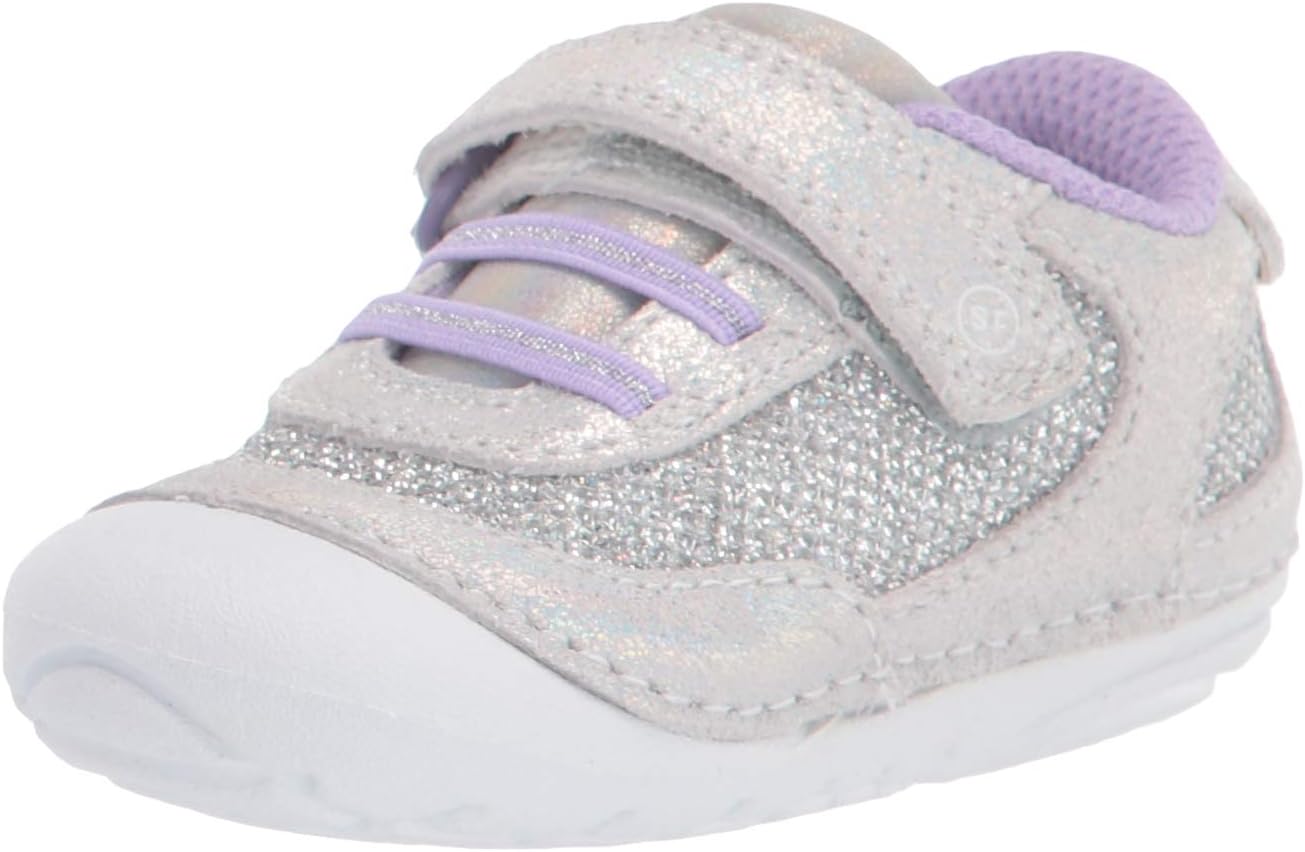
Stride Rite
sneaker · hook-and-loop strap; elastic laces
Amazon link available
Stride Rite
sneaker · hook-and-loop strap
Amazon link availableNo universal ranking follows from the fabric name. Panel openness, backing, lining, padding, overlays, socks, fit, and temperature all matter. Inspect the exact construction and observe the child during ordinary wear rather than relying on a category slogan.
Choose by the exact care label and dirt pathway. Canvas may show surface marks; mesh may trap particles or allow spills into backing. An approved machine or hand-wash method can matter more than the material name, as can recovery time before the next day.
Do not buy a visibly strained shoe expecting it to become the right width. Use current measurements, named width options when available, and an indoor fit check. Material relaxation is not a reliable substitute for suitable shape.
Durability depends on yarn, weave, overlays, stitching, use, fit, care, and the location of abrasion. Inspect the exact pair and its documented construction. A broad material comparison cannot predict the service life of two unrelated sneakers.