
Stride Rite
Soft Motion Artie First Walker
high-top sneaker · hook-and-loop strap; elastic laces
Amazon link availableSoles and Surfaces
Evaluate toddler shoe traction by surface, tread geometry, sole condition, contamination and movement instead of trusting a grip label.
Traction is an interaction, not a feature stamped into a sole: the same shoe can behave differently on dry pavement, dusty tile, wet decking, and loose ground.
Think in four parts: outsole, surface, contamination, and movement. The outsole includes its material, contact area, tread depth, edges, flexibility, and wear. The surface may be smooth, rough, firm, soft, level, or sloped. Contamination includes water, mud, dust, sand, leaves, food, soap, and ice. Movement adds speed, direction changes, braking, and climbing. A marketing word such as grippy describes none of those interactions completely.
This is why there is no universally non-slip toddler shoe. A tread that bites into packed soil may carry mud onto tile. A broad flat area that feels predictable on a clean indoor court may offer little purchase in loose gravel. Deep lugs can be useful on some outdoor routes yet feel awkward on a smooth indoor floor. Start every footwear decision with the hardest normal surface on the itinerary, then examine whether one pair can also manage the transitions.
Wide channels may give water or loose material somewhere to move, while many small edges may create contact opportunities on a firm surface. Large separated lugs can penetrate some soft ground, and broad flatter zones can place more outsole against a hard floor. These are inspection cues, not guaranteed outcomes, because sole material and conditions matter. Decorative grooves that are barely deep may disappear quickly; very deep voids may collect stones or packed mud.
Flex the shoe gently only as the maker permits and observe where the forefoot bends. A sole that is extremely stiff for the child and activity can interfere with easy movement even if the tread looks aggressive. At the other extreme, a thin indoor bottom may not offer the coverage needed outdoors. View the sole from the side, heel, and toe. Sharp projections, peeling rubber, exposed foam, or uneven wear turn the decision from comparison to replacement or professional repair guidance.
On clean, dry indoor floors, prioritize a secure fit and a bottom intended for that setting; dust or a spill can still change the result. On pavement, inspect coverage, wear resistance, and whether the tread remains useful after repeated abrasion. On grass, ask whether it is dry, wet, flat, or sloped, because the word grass hides very different conditions. On loose playground fill, keep debris entry and sole stability in the brief. On wet decking or pool approaches, use footwear intended for the venue and continue to follow walking and supervision rules.
Transitions deserve their own line on the plan. A child may leave wet grass, step onto smooth concrete, and enter a tiled lobby within minutes. The outsole carries the first surface onto the next. Pause to knock off loose material, wipe the bottom when appropriate, or change shoes rather than assuming the tread resets itself. If a facility posts footwear requirements or prohibits certain soles, follow the venue rule.
Compare the left and right outsole under good light. Look for smooth areas, rounded tread edges, embedded stones, packed dirt, cracks, separation, and foreign material stuck at the heel or forefoot. Then set the shoes on a level surface and see whether obvious uneven wear makes one tilt. A sole that has aged in storage can also change even when the upper looks new, so secondhand and saved sibling pairs need a fresh condition check.
Clean only according to the care instructions. Digging at tread with a sharp tool can damage the sole, and applying household coatings or adhesives can create an unpredictable contact layer. Allow a cleaned outsole to dry as directed before evaluating it. If the material remains slick, cracked, sticky, hard, or separated, do not use a home hack to manufacture traction. Replace the pair or seek guidance appropriate to the shoe's construction.
Begin indoors on a clean, dry, uncluttered area. Check fit first: heel slip, excess length, and a loose closure can look like a traction problem because the foot moves separately from the shoe. Let the child make ordinary starts, stops, turns, and crouches while an adult stays close. Do not create a wet or slippery test surface, ask the child to sprint, or deliberately push the sole sideways. A home challenge test adds risk without proving performance elsewhere.
The first real outing should be conservative and supervised on the intended normal surface. Watch the transitions and note where any slip occurs. Was the outsole wet, dirty, or loaded with sand? Did the shoe twist on the foot? Was the slope or speed different? This short incident note makes the next decision useful. Repeated unexpected slipping on an ordinary allowed surface is a reason to stop using that pairing, not an invitation to keep experimenting.
Shoes do not repair wet floors, loose rugs, cluttered stairs, polished ice, unstable playground fill, or rules about running. Address the environment: clean spills, secure mats, clear routes, use gates and handrails as appropriate, and follow venue guidance. A traction-focused shoe may reduce one mismatch while introducing another, such as heavy lugs that track debris indoors. Pair selection and hazard control are complementary tasks.
Use a compact buying note: primary surface, worst expected contamination, indoor-outdoor transitions, outsole condition checks, and closure behavior. Photograph the new tread so later wear is easier to compare. Retire or reassign the pair when its condition or the route changes. The best traction decision is not the sole with the busiest pattern; it is a sound, secure shoe whose bottom is intended for the child's actual surface, kept clean enough to work as designed, and backed by sensible movement and supervision.
Weather changes a known route. Morning frost can affect a shaded walkway after the sunny section clears. Rain can put a film on painted lines, leaves, metal covers, wood, and tile near entrances. Heat can soften some ground and change how long a child comfortably stays outside. Check current conditions and venue closures instead of using yesterday's shoe choice automatically.
Do not compare wet traction by pouring water at home or seeking slick spots. Use footwear intended for the planned conditions, slow the transition, and choose another route when surfaces are unsafe. After the outing, inspect what the tread carried back and dry the shoe as directed. A weather plan may mean postponing, using a different surface, or changing footwear; it is not evidence that one sole can conquer every condition.
Reviewed model starting points
These model families link to Amazon listings. Check the selected size, width and color because availability and features can vary.
Stride Rite
high-top sneaker · hook-and-loop strap; elastic laces
Amazon link available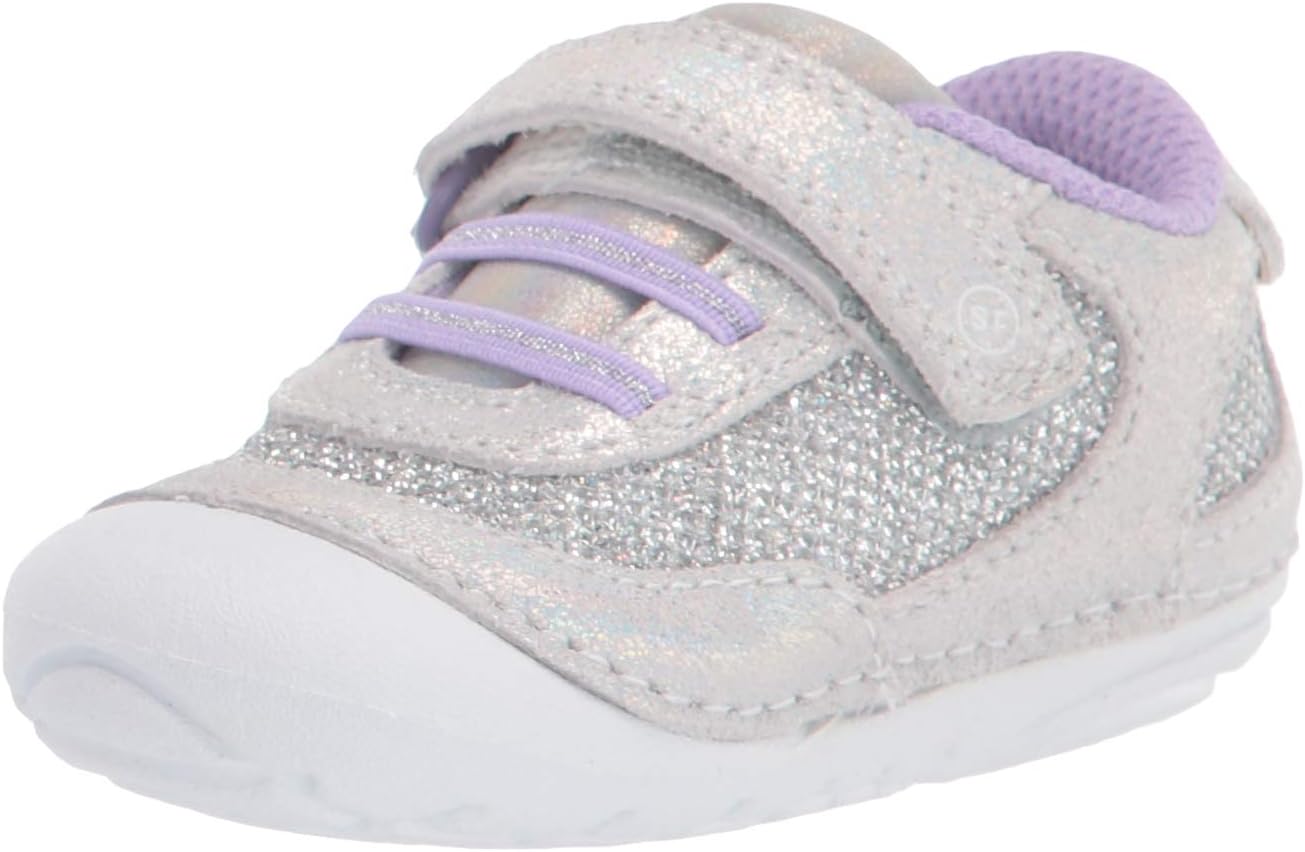
Stride Rite
sneaker · hook-and-loop strap; elastic laces
Amazon link available
Stride Rite
sneaker · hook-and-loop strap
Amazon link availableNo. Deep tread may help on some soft or loose surfaces, while a different contact pattern may suit a firm floor. Sole material, contamination, wear, fit, and movement all affect the interaction.
Sand, dust, mud, leaves, or moisture can travel in the tread and change contact on the next surface. Inspect and clean the outsole as directed before moving onto smooth indoor flooring.
Avoid unapproved coatings, glue, or abrasive modifications. They can change the sole unpredictably or damage it. Follow the shoe maker's care and repair guidance or replace an unsuitable pair.
Inspect tread and condition, verify secure fit, and begin with ordinary supervised movement on a clean, dry version of the intended surface. Do not manufacture slippery conditions or ask a child to perform challenge maneuvers.