
Stride Rite
Soft Motion Artie First Walker
high-top sneaker · hook-and-loop strap; elastic laces
Amazon link availableStyles and Materials
Evaluate toddler high-top shoes by opening, collar contact, closure, movement and daily routine without assuming the taller style provides medical support.
A high-top is a collar-height choice, not a diagnosis or a guarantee of support. Judge whether the exact pair opens, fits, fastens and moves well on the child.
High-top usually describes an upper that rises around or above the ankle area compared with a low-top version. That visible difference can change entry, collar contact, warmth, styling, and the amount of material a closure must control. It does not by itself prove better stability, injury prevention, alignment, or treatment value. Those claims require evidence about the exact product and, when health concerns are involved, guidance from a qualified professional.
Treat the name as a prompt to inspect. Look at where the collar meets the leg, how far the tongue or opening moves, whether the closure has one or several adjustment zones, and how the outsole bends. Compare the actual high-top with the actual low-top candidate rather than transferring assumptions from adult basketball shoes or fashion sneakers. Toddler versions may differ in materials, proportions, and closures even when they share a familiar model name.
Before fitting, open every lace, strap, zipper, or elastic section as the maker intends. Place a hand inside to feel whether the tongue gusset, collar padding, or internal seam narrows the route into the shoe. Then guide the toddler's foot in without pointing the toes forcefully or pulling against the leg. If entry requires a struggle while the interior length seems generous, the opening or instep shape may be the issue rather than the numerical size.
A taller collar can make it harder to see whether the heel is fully seated. After entry, gently settle the heel according to ordinary fitting practice and fasten from the lower adjustment area upward when the design allows. Do not use the top strap or laces to drag a poorly seated foot backward. The closure should organize a suitable fit, not force the foot into a shape the shoe does not provide.
Have the child stand, walk, turn, squat, and sit on a clean indoor surface. Watch the top edge from the front, side, and back. A collar that looks comfortable while standing may fold into the leg during a deep crouch or press where a sock ends. Check both sides because foot and leg shapes can differ. Inspect after the trial for persistent marks, rubbing, trapped sock fabric, or reluctance that appears only in the pair.
Sock height matters, but a taller sock should not be used to disguise a rough seam or unsuitable collar. Choose the intended sock before sizing and keep its thickness consistent. If the child wears leggings or cuffed pants, confirm that the fabric can sit above, over, or neatly outside the collar without bunching inside. Style decisions at the ankle directly affect the fit environment of a high-top.
Many high-tops must hold the forefoot and manage the collar. Treat those as separate zones. The lower closure should accommodate the foot's width and instep without visible strain, while the upper section should lie comfortably around the ankle area without acting as a tourniquet. If tightening the top is the only way to stop heel lift, check length, heel shape, and overall volume before assuming more tension is the answer.
Consider who will operate the shoe. Long laces may allow detailed adjustment but add tying and supervision; straps may be faster but offer only the range built into their placement; a side zipper may ease entry but does not automatically replace other fastening. Inspect for loose laces or unsecured components before every wear. Follow the maker's instructions, and do not modify closures or add aftermarket parts that create snag or detachment hazards.
A useful comparison measures more than appearance. Time a calm dressing attempt, note how many closure steps require adult help, and consider whether the pair must come off at daycare, indoor play, or security checkpoints. A high-top may be welcome for a particular look or extra coverage, yet frustrating during a routine with frequent shoe changes. A low-top may be simpler, but it still has to hold the foot and suit the surface.
Think through a daycare morning. If the toddler's pants catch on the collar and two straps must be reset after every removal, the style adds routine cost. For a weekend event with one dressing and one removal, the same cost may be trivial. Neither outcome is universal. The right category is the one whose entry, fastening, coverage, and care fit the actual frequency of use.
More upper coverage may change how warm the shoe feels, how much debris reaches the sock, and how long the pair takes to dry, but exact materials and construction determine the result. A perforated textile high-top and a heavily padded synthetic style should not be treated as equivalent. Read the material and care lines for the selected color, and consider the climate and indoor duration. Do not rely on broad breathable or weather-ready language without model-specific detail.
During cleaning, open the collar and tongue so loose material can be removed and the interior can recover as directed. Avoid soaking, machine washing, heat, or cleaners unless the exact instructions allow them. Inspect the upper flex points and closure attachments as part of care. If padding stays damp or the collar becomes distorted, pause wear until the pair is dry and its condition can be reassessed.
For each of the first several ordinary wears, record one sentence: where the shoes went, who put them on, whether the closure stayed set, whether the collar left persistent irritation, and how the child moved. This is not a product test or medical assessment. It is a routine log that reveals whether the high-top's extra entry and collar work earns its place in the rotation. Stop earlier if the pair causes pain, repeated rubbing, or changed movement.
At the fifth review, compare the high-top with the child's alternative shoe on fit, dressing effort, setting, and care. Keep it when it performs a named job and fits both feet. Change size, model, or category when the opening, collar, or closure repeatedly causes trouble. If a clinician has recommended a specific shoe feature for an individual concern, follow that advice rather than substituting a general high-top guide.
Reviewed model starting points
These model families link to Amazon listings. Check the selected size, width and color because availability and features can vary.
Stride Rite
high-top sneaker · hook-and-loop strap; elastic laces
Amazon link available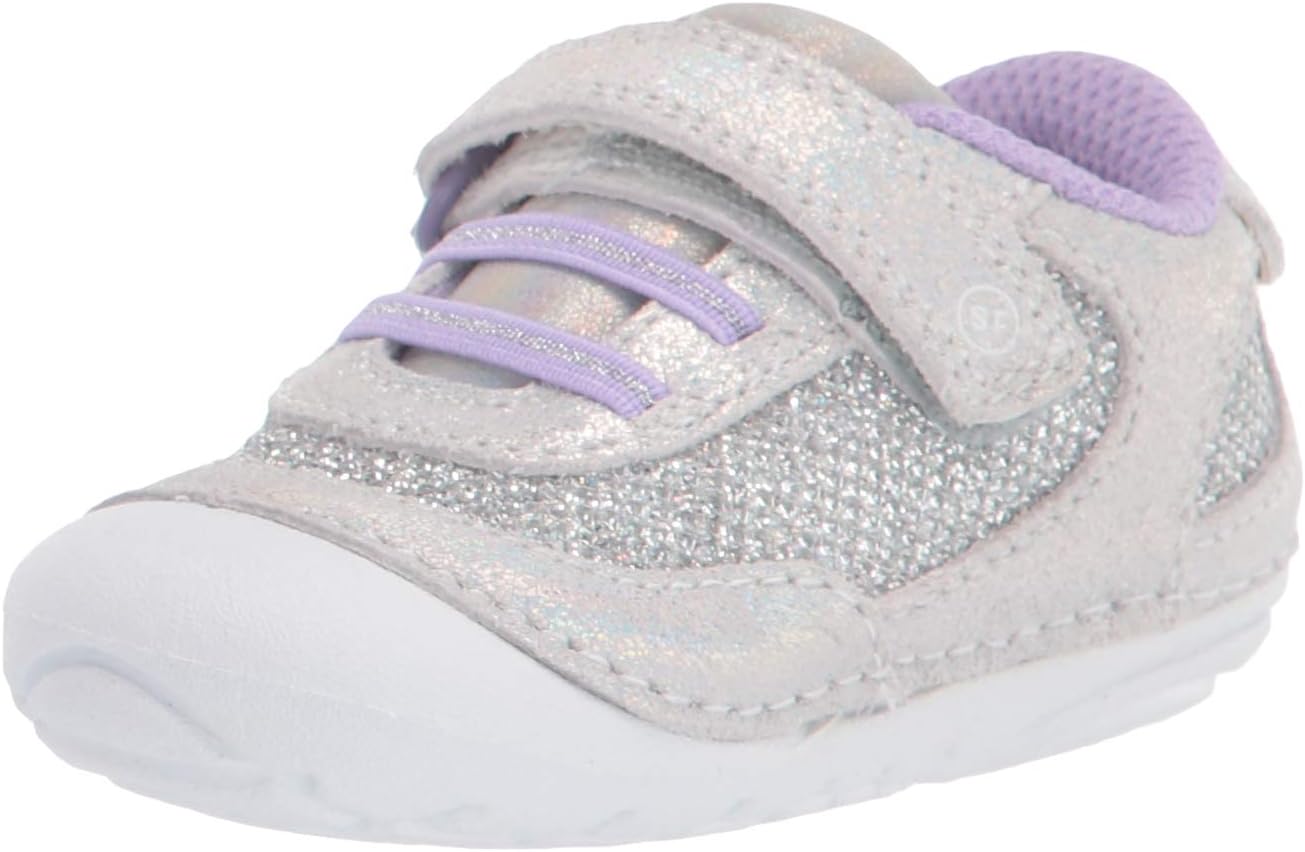
Stride Rite
sneaker · hook-and-loop strap; elastic laces
Amazon link available
Stride Rite
sneaker · hook-and-loop strap
Amazon link availableCollar height alone does not establish a medical or performance benefit. Construction varies, and individual concerns require qualified guidance. Judge ordinary footwear by exact fit, opening, closure, movement, surface, and the product's documented purpose.
The opening, tongue, padding, instep volume, or incomplete loosening may be blocking entry. Open every component fully and use the exact chart. Do not force the foot or pull it into place by overtightening the top closure.
A sock that extends beyond the collar can reduce direct contact and help you inspect for rubbing, but it cannot correct a poor fit or rough interior. Fit the shoe with the intended sock thickness and keep fabric from bunching.
That depends on daycare rules, removal frequency, and who manages the closures. Ask the caregivers, rehearse the routine, and choose the pair only if it stays secure and can be handled consistently without excessive dressing time.