
Stride Rite
Soft Motion Artie First Walker
high-top sneaker · hook-and-loop strap; elastic laces
Amazon link availableFit & sizing guide
Use a monthly toddler shoe-fit check and clear replacement signals instead of relying on a rigid buying calendar.
Toddlers need replacement shoes when the pair no longer fits or performs its job, not after a fixed number of weeks. Check fit about monthly and sooner after a growth spurt, a new complaint, a seasonal sock change or visible damage. Always measure both feet and use the exact brand chart for the replacement.
Put a recurring fit check on the same day each month, such as the first weekend. On a hard floor, let the child stand in the shoes with normal socks. Check space ahead of the longest toe, the position of the broadest forefoot, heel security and how the closure sits. Then remove the pair and inspect the skin. This habit catches gradual changes that may be missed when a toddler does not clearly report pressure.
Monthly is a checking rhythm, not a guarantee that a new pair is due. Some shoes will pass several checks; others may fail sooner during a growth spurt or after a change to thicker socks. Age-based claims such as “one size every few months” describe averages at best. Individual growth, model shape and activity vary too much for the calendar to select a size or purchase date.
A shoe can be too short even when it looks new. Re-measure both feet if toes approach the front, the upper strains, closures have moved to their limit or a previously accepted pair is suddenly rejected. Use the longer foot and the exact manufacturer’s chart for a replacement candidate. Do not simply buy the next label, because the child may need a different width, volume or toe shape instead.
Conversely, a shoe can remain long enough but stop doing its job. Check tread for smooth areas, splitting or embedded debris. Look for distorted heel structure, separated layers, a bunched lining, broken closures and wet interiors that no longer dry normally. A daycare sneaker, rain boot and water shoe have different functional tests. Replace when the construction cannot provide the protection, traction or secure fastening expected for its setting.
Toddlers may communicate fit indirectly. New resistance during dressing, asking to remove one pair, curling toes as the shoe goes on, rubbing at the heel or changing movement only while wearing that pair should trigger an immediate fit check. Compare normal barefoot movement with a brief walk in the shoes on a safe indoor surface. The observation tells you to investigate; it does not prove the shoe is the cause.
Stop using a pair that causes a blister, wound or persistent pressure mark. Sudden or continuing limping, swelling or pain deserves pediatric assessment, especially when it remains after the shoes are removed. Buying a larger shoe is not a substitute for care. If the issue disappears with one model but not another, document the model shape and closure so the replacement process can avoid the same mismatch.
A lightly used dress shoe can become too small while the daily sneaker wears out first. Check every active pair, including boots stored between seasons, water shoes used only on weekends and backup daycare footwear. A size label shared by two pairs does not mean their usable interiors are identical. Measure and try each one independently. Remove outgrown pairs from easy reach so they are not grabbed during a rushed morning.
Seasonal changes deserve an extra review. Thick winter socks reduce usable space; bare feet in sandals change heel hold; and a rain boot with no adjustable closure may need a different fit strategy. Do not use heavy socks to make an oversized boot stable or omit needed socks to preserve a tight sneaker. Select the new shoe around the real clothing and conditions in which it will be worn.
Keep a dated note containing both foot lengths, the successful brand and model, size label and a short fit comment. When replacement time comes, this record narrows the search. It should not replace a fresh measurement. Buying multiple future sizes can backfire because growth is uneven, seasons change, returns expire and the next model may fit differently. One verified current pair is often more useful than several speculative boxes.
If budget allows, a practical rotation can reduce emergency purchases, but each pair must fit now and serve a distinct job. For example, one everyday closed shoe and one weather-specific pair may be enough. Rotate only when both pass inspection. Cleaning and drying according to the manufacturer can extend useful life, but repairs should not disguise failing grip, broken fastening or exposed rough edges.
Ask five questions: Is there appropriate toe space? Does the widest part fit without strain? Does the heel remain secure? Are the closure, lining and sole intact? Does the child move comfortably in this pair? A no answer identifies the category to investigate. Length failure calls for measurement; width or volume failure calls for a different last; damage calls for replacement even if the size remains correct.
For the new pair, repeat the full process: measure both feet while standing, use the longer result, consult the exact brand and model chart, and test both shoes indoors with normal socks. Age may help locate a department but should not choose the label. Save packaging until the child has walked, turned and crouched without rubbing, toe contact or repeated heel lift.
For an everyday sneaker, replacement may be triggered by short length, a failing closure or tread worn smooth in key contact areas. A rain boot may remain visually tidy but fail because the lining bunches, the shaft rubs or water enters through a split. A sandal can become unsuitable when toes approach the edge, the heel overhangs or straps no longer secure the foot. Writing one or two role-specific triggers makes the monthly review more useful than a generic glance.
Daycare backups deserve a named person and date. Ask staff to mention new removal attempts, rubbing or a loose closure, but confirm observations yourself at home. Shoes can be swapped between cubbies or worn with different socks, so a report is a reason to inspect rather than proof of outgrowth. Mark the child’s name without covering size or care information.
When one pair fails, review the rest of the rotation before ordering. Feet do not grow selectively, although each model can reveal the change at a different time. A sandal might still have visible length while a tapered sneaker feels tight; a boot might slip because its shape is generous. Replace only the pair whose size, shape or condition fails, and avoid interpreting different outcomes as contradictory.
Reviewed model starting points
These model families link to Amazon listings. Check the selected size, width and color because availability and features can vary.
Stride Rite
high-top sneaker · hook-and-loop strap; elastic laces
Amazon link available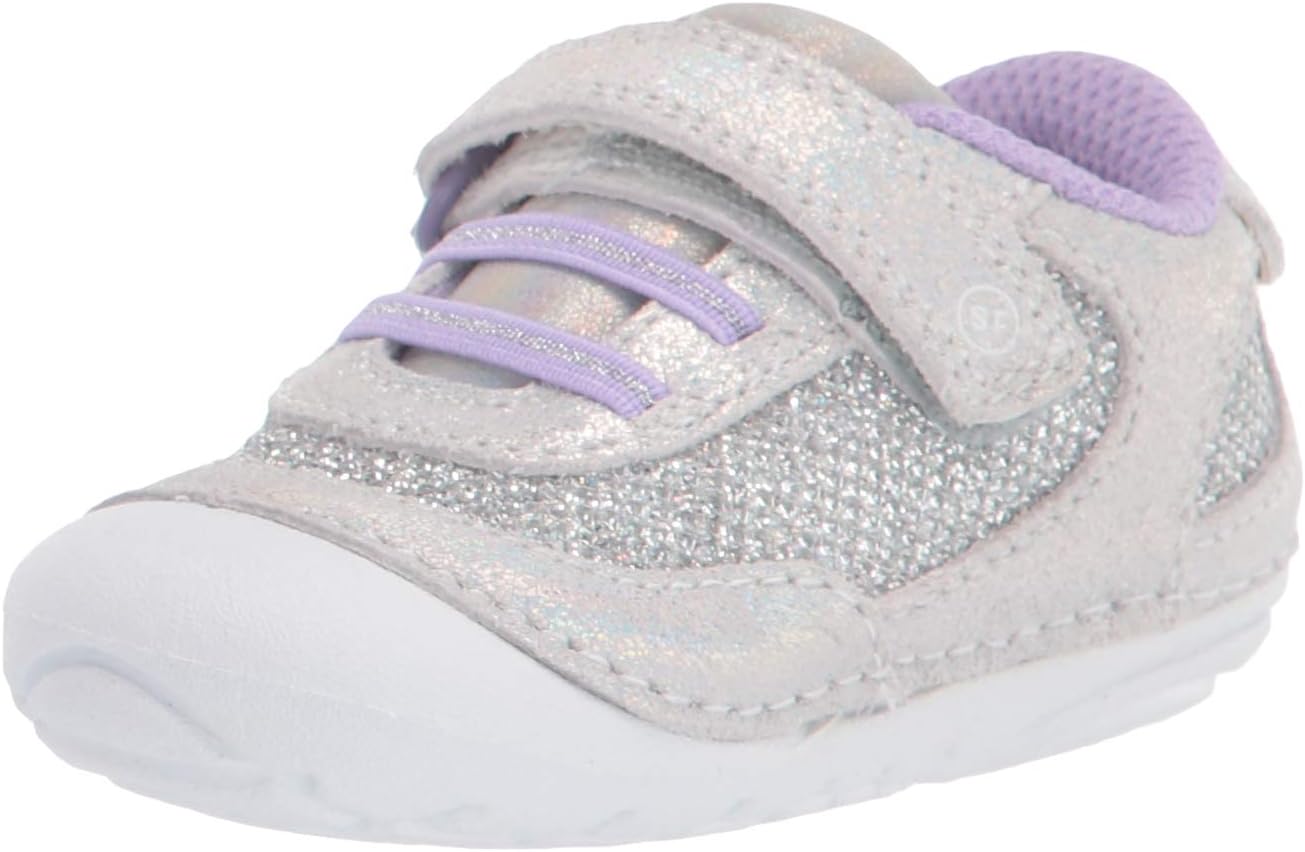
Stride Rite
sneaker · hook-and-loop strap; elastic laces
Amazon link available
Stride Rite
sneaker · hook-and-loop strap
Amazon link availableNot by rule. Growth and wear vary. Check fit about monthly and replace when length, width, security or condition fails rather than buying on a fixed three-month schedule.
Yes. Worn tread, separated layers, damaged closures, distorted structure or rough lining can make a pair unsuitable for its intended setting despite adequate length.
No. Re-measure both feet and use the exact brand chart. The problem may be width, instep volume or model shape rather than length.
Include every active pair in the monthly review and test it with the socks and setting for which it is intended. Stored seasonal shoes can become too small between uses.
Stop the suspect footwear and seek pediatric guidance for persistent pain, limping, swelling, skin injury or concerns that continue without the shoes.
Product details can change. Confirm the current exact model before buying.