
Stride Rite
Soft Motion Artie First Walker
high-top sneaker · hook-and-loop strap; elastic laces
Amazon link availableFoot Shape & Fit
Distinguish narrow or low-volume toddler shoe fit from extra length, then compare heel shape, closures and exact model options without shortening toe room.
A toddler may need a lower-volume or narrower-fitting model when length is correct but the heel lifts, the upper folds deeply and closures run out of adjustment. Do not automatically size down: a shorter shoe can crowd the toes while leaving the heel geometry unresolved. Compare exact models for width, depth, closure reach and rear-foot shape, then verify both feet indoors.
Begin with the current pair fully opened and the child's usual socks smoothed. Seat the heel, fasten comfortably and watch the upper while the child stands. Mark observations in four zones: extra length in front, loose sidewalls at the forefoot, unused space beneath the tongue and movement around the heel. A foot can be relatively narrow in one area and ordinary in another. “Narrow feet” is a shopping hypothesis, not a medical label or a reason to choose the smallest shoe that stays on.
Repeat on both sides. One shoe may lift because that foot is shorter, while the other reveals the model's true volume mismatch. Inspect the pair for a collapsed heel, twisted tongue or compressed lining before blaming the last. The objective is to identify a pattern that another model can solve: secure rear foot plus adequate toe width, rather than tightness everywhere.
Create three lines on a note. Red means the longest toe is crowded or the measured foot falls beyond the chart's range. Yellow means length appears plausible but evidence is incomplete. Green means the chart, standing toe position and movement all support the candidate length. Only a green-length shoe should move to a narrow-volume diagnosis. This prevents heel slip from triggering an immediate size decrease.
If the current shoe is red, measure again and address length first. If it is yellow, clarify the chart definition or use the maker's approved fit method. If it is green yet the heel rises and the closure bottoms out, compare shape. Sizing down from green may shift the widest part of the shoe backward and press the toes. The correct response to unused vertical or rear space is often a different last, not less interior length.
A narrow forefoot may leave excess space at the sides even when the heel is stable. A low instep can produce deep folds under the tongue and force straps to their shortest usable position. A slim heel can lift in a model that fits well across the toes. These patterns can combine, but they ask different things from a shoe. Record the failing area rather than searching only for a narrow label.
Compare the child's position with the shoe's architecture. Where is the broadest part of the foot relative to the sole? Does the tongue contact the instep before the closure ends? Does the collar hold the heel without pushing it forward? A model with a generous toe area and shaped rear can work differently from one that narrows uniformly. Product photos may suggest geometry, but the actual pair on both feet supplies the evidence.
Closures control different zones. A single strap near the toes may not restrain the heel. Two straps can adjust forefoot and instep separately. Laces can distribute tension but require consistent tying; elastic throats may offer little change. Read the length and placement of the actual hardware. “Adjustable” is not enough when the useful range begins after the upper has already collapsed around a low-volume foot.
Fasten with ordinary pressure. Reject a setup that needs the tongue folded, strap wrapped beyond its landing patch or laces tightened until eyelets distort. Padding under the tongue can change contact but should not be added as an improvised insert. If a maker offers a supported fit component or an exact narrow width, verify which model and size it applies to. Inventory can be thin, so do not promise a labeled option before confirming availability.
Place two plausible candidates on a clean floor and change one variable at a time. From behind, observe several straight steps, a turn and a rise from a crouch. Note whether the heel climbs, the shoe rotates, the child grips with the toes or the closure shifts. Then inspect toe position and forefoot pressure. The narrower-feeling pair wins only if it improves control without creating a short or compressed front.
Use the same sock and fastening helper for both trials. A change in sock thickness can disguise the comparison, while a different adult may apply different tension. Keep tags and returns intact. If neither candidate combines toe space with heel security, record why and search for another geometry. Choosing the less obvious failure merely moves the problem to the first long outing.
Brand names do not carry one fit across every shoe. Record the exact model, version, width code, size and chart used for any successful pair. If the listing supplies only medium width, inspect model-level closure and heel information rather than assuming it cannot work; medium is not a universal physical dimension. Conversely, a narrow option is only a candidate until the front and instep are checked.
Online, require clear returns and enough imagery to examine opening, tongue, strap path and rear shape. In person, bring the intended socks and current measurements. Ask the fitter to preserve the toe room while improving volume control. Avoid shopping language that promises a best shoe for every narrow foot. The useful recommendation is a verified model whose particular last matches this child's distribution of space.
The hypothesis fails if a shorter shoe still lifts, a narrow model presses the forefoot, or an adjusted closure changes nothing at the heel. Reopen the problem: length may be excessive, the instep may be higher rather than lower, one shoe may be damaged or the collar shape may simply disagree with the foot. Remove debris and reseat removable components before another comparison.
Stop using any pair that causes pain, broken skin or a persistent walking change. If concerning symptoms appear with and without shoes, seek appropriate professional guidance rather than continuing retail experiments. For ordinary loose-fit troubleshooting, success looks unremarkable: toes have their intended room, the upper lies smoothly, the heel stays controlled and the closure retains adjustment. That balanced outcome matters more than obtaining a narrow label. Revisit the record after growth, because a once-useful low-volume model can become short even while it continues to hold the heel neatly.
Reviewed model starting points
These model families link to Amazon listings. Check the selected size, width and color because availability and features can vary.
Stride Rite
high-top sneaker · hook-and-loop strap; elastic laces
Amazon link available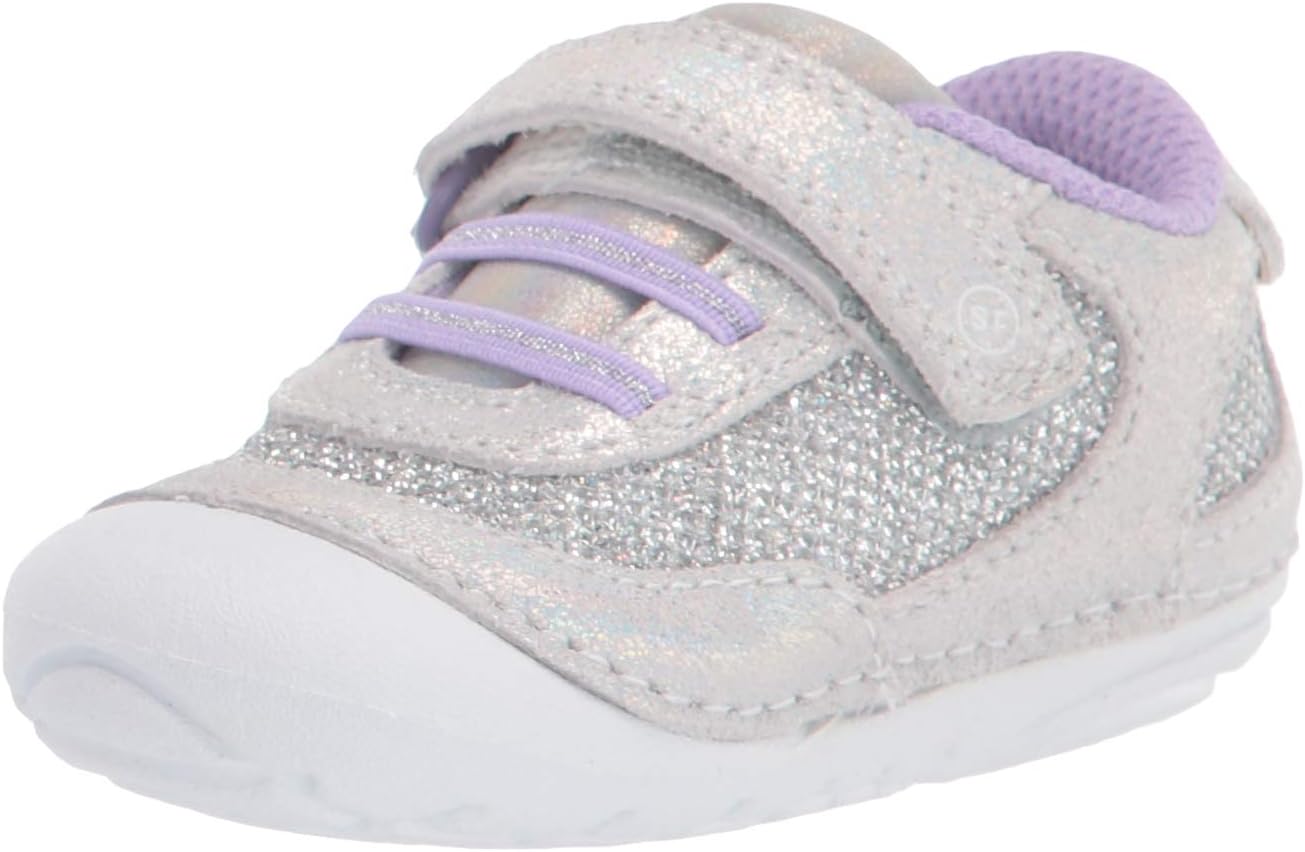
Stride Rite
sneaker · hook-and-loop strap; elastic laces
Amazon link available
Stride Rite
sneaker · hook-and-loop strap
Amazon link availableNot unless current measurements and the exact chart show excess length. Sizing down to stop heel lift can crowd the toes; a lower-volume model, different heel shape or better-placed closure may solve the actual problem.
No. Slip can come from extra length, low overall volume, closure placement, heel geometry, sock setup or shoe wear. Classify the movement and check each zone before choosing a width.
Laces can distribute adjustment, but the underlying last and the caregiver's ability to tie consistently still matter. A well-placed strap may work better in a suitable model; evaluate the exact construction.
Reject that shape. A uniform narrow construction may solve heel space by removing needed forefoot room. Look for a model combining appropriate toe shape with lower volume or a more compatible rear foot.