
Stride Rite
Soft Motion Artie First Walker
high-top sneaker · hook-and-loop strap; elastic laces
Amazon link availableSide-by-side comparison
Compare flexibility, ground protection and intended settings before choosing a soft- or firmer-soled toddler shoe.
Soft and hard describe a spectrum, not two regulated toddler-shoe classes. A fabric-bottom indoor shoe, a thin flexible rubber first-walker and a sturdy outdoor sneaker can all be marketed with simplified sole language. The useful decision is how much ground separation, traction and flexibility a child needs for a named setting. Begin with the surface and duration, then verify what the sole is made from, where it bends and whether the whole shoe fits securely. This approach avoids turning softness into a virtue by itself or treating a firmer outsole as proof of protection in every environment.
Start by separating bottom material from bending behavior. Suede or textile bottoms usually belong to protected indoor spaces. Thin rubber may flex readily while still providing an outdoor contact surface. A thicker rubber or synthetic outsole can feel firmer, yet grooves and segmented construction may preserve movement at the forefoot. Read the material listing and intended-use language, then handle the shoe without forcing it into an extreme fold. Note where it yields under gentle pressure and whether the upper moves with the base. Calling all flexible soles soft and all durable-looking soles hard erases differences that matter when comparing real products.
List the surfaces the child will encounter: clean rugs, polished floors, dry pavement, gravel, damp grass or playground mulch. An indoor bottom that works on carpet may absorb moisture or wear quickly outside. Conversely, a substantial outdoor outsole may be unnecessary for a short supervised session in a protected room. Look for small hazards as well as texture. Hot pavement, rough aggregate and scattered debris change the value of ground separation. The right sole category follows the environment; it should not be selected from walking stage alone. If one day includes sharply different settings, a two-pair rotation may be clearer than asking one compromise shoe to cover both.
A supple shoe still needs to stay aligned with the foot. Soft uppers and bendable bases can disguise excess length or a wide opening because the material collapses rather than holding a visible shape. Fasten the candidate using the normal closure range and observe the heel during starts and turns. Check that the widest part of the foot sits near the shoe's broadest area, and that toes are not pushing against seams. A firmer shoe can also fail if its flex point lands ahead of or behind the forefoot. Neither construction rescues a size chosen only from age or an old pair's label.
A child who has begun walking may initially take only a few outdoor steps, then quickly progress to longer playground visits. Reassess the job rather than assuming the first shoe must be replaced on a developmental timetable. Look at wear, traction, exposure and how long the pair stays on. If the current flexible outsole is designed for outdoor use and remains intact, it may continue to serve. If outings now involve rougher ground or repeated wet conditions, a more protective sole may become practical. This is a change in route requirements, not evidence that every toddler should graduate to a rigid shoe.
Sole firmness often arrives with other design choices. A thick base can add weight, raise the toe spring or widen the platform. A very thin base may reveal a tapered upper or low-volume toe area that is not obvious in profile photos. Compare the candidates on a flat surface and inspect the outline from above. Pick them up to understand the weight difference, but remember that scale-free impressions online are unreliable. During an indoor trial, watch whether the child clears the toes, turns without the shoe twisting and crouches comfortably. A manageable overall package matters more than any isolated thickness measurement.
Flexible bottoms can abrade, puncture or separate at the edge; firmer soles can lose tread, crack at flex grooves or detach from the upper. Learn what the selected model's normal construction looks like before wear begins. After messy outings, remove loose debris and follow the maker's care instructions so damage is not hidden under dirt. Recheck both shoes for uneven wear and inspect the inside for compressed or displaced liners. Replacement should respond to fit, condition and current use. A shoe does not become unsuitable merely because it bends, and a substantial outsole is not dependable once traction or attachment has failed.
Create a short record for each candidate: primary location, longest expected wear, surface hazards, wet exposure, fastening operator and approved care method. Add the measured size source and the return window. This route card makes tradeoffs visible. The softest option may suit indoor play but not the walk there; the firmer option may handle the path but feel cumbersome for an all-day indoor schedule. If neither cleanly matches the route, adjust the shortlist rather than rationalizing a poor fit. Keep the card after purchase and update it when the child's activities, measurements or shoe condition change.
Reviewed model starting points
These model families link to Amazon listings. Check the selected size, width and color because availability and features can vary.
Stride Rite
high-top sneaker · hook-and-loop strap; elastic laces
Amazon link available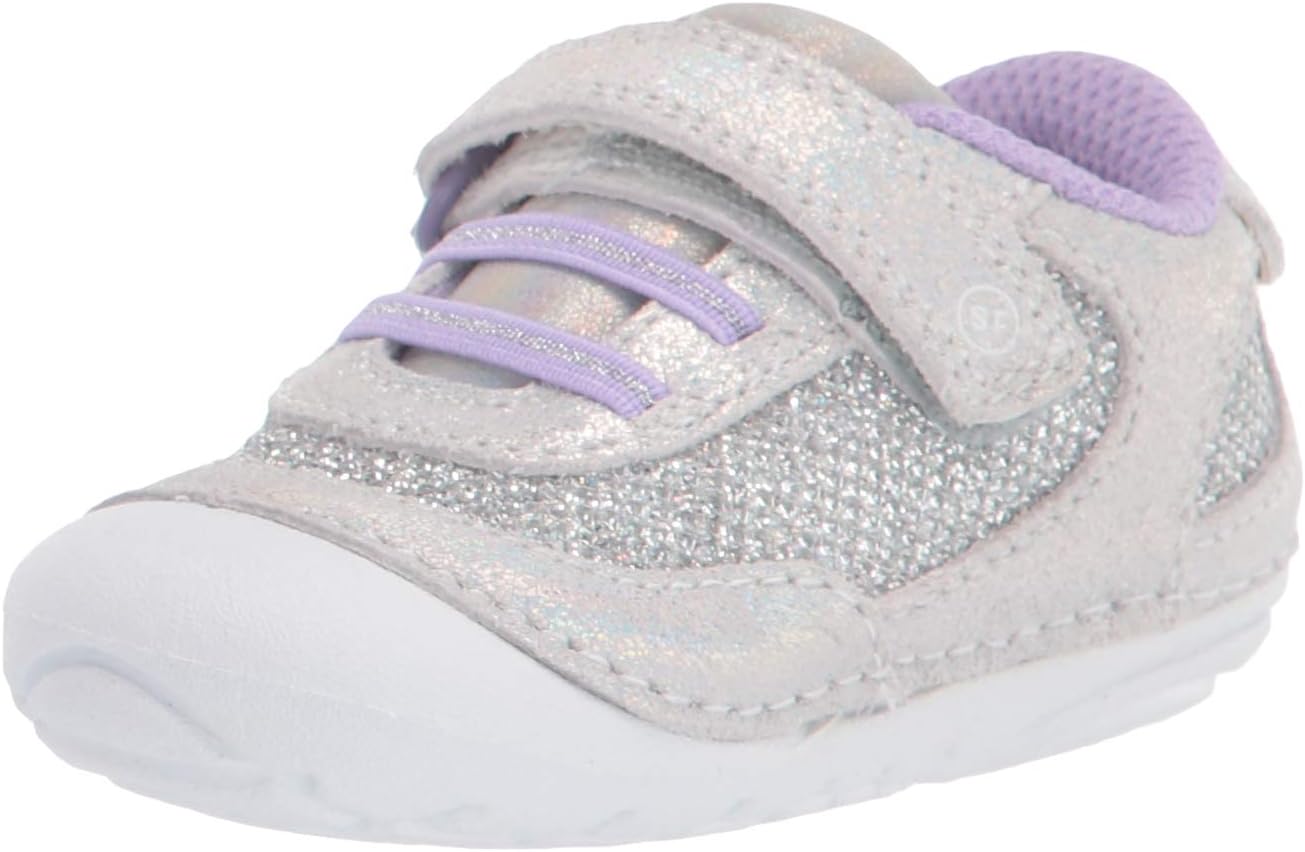
Stride Rite
sneaker · hook-and-loop strap; elastic laces
Amazon link available
Stride Rite
sneaker · hook-and-loop strap
Amazon link availableNot necessarily. Some flexible rubber shoes are made for early outdoor walking, while fabric bottoms may be intended for indoor use. Follow the exact model's stated purpose and inspect its construction.
A thicker or firmer base can add separation from rough ground, but material condition, coverage, traction and fit still matter. Hardness alone does not establish suitability.
Extreme folding is not a universal shopping test. Observe where the shoe flexes under gentle handling and during natural movement, without damaging the product or assuming maximum bend is always desirable.
Replace it when it is outgrown, damaged, persistently slippery, no longer secure or being used for settings beyond its stated design. Check both fit and sole condition regularly.