
Stride Rite
Soft Motion Artie First Walker
high-top sneaker · hook-and-loop strap; elastic laces
Amazon link availableSide-by-side comparison
Learn how toddler sneakers and tennis shoes overlap, where court-inspired designs differ, and what matters for daycare, play and fit.
The label on the box is less decisive than the job the shoe must do. In toddler departments, sneaker is a broad category, while tennis shoe may mean either a court-inspired casual style or an athletic shoe built for lateral movement. Retailers often use the terms loosely. A useful comparison therefore starts with the actual pair: its outsole, opening, closure, upper and selected size. For daycare, playground time or family errands, the better option is the one that stays secure through ordinary movement, can be operated by the responsible adult or child, and can be checked against understandable sizing information.
Open both product pages and ignore category breadcrumbs for a moment. A shoe called a tennis sneaker may simply borrow a flat court silhouette, while another may have a grippier rubber outsole and more structured upper. Look for the manufacturer's complete model name and description, then confirm that the selected variation is the toddler construction rather than a visually similar little-kid or adult version. Compare the toe shape, heel counter, fastening method and visible flex area. This translation step prevents a naming difference from masquerading as a performance difference. If the two candidates are built alike, treat them as peers and decide on fit and routine instead of marketing vocabulary.
Write down where the shoes will actually go during a normal seven-day span. Daycare cubbies, paved walks, indoor playrooms and dry playgrounds usually call for dependable everyday footwear rather than specialized court equipment. A child attending a beginner racquet activity may still spend most of the session standing, running forward and waiting, so the class rules and surface matter more than the sport name. Note how long the shoes stay on, whether a backup pair is available and who handles changes. This small schedule reveals whether quick dressing, easy cleaning, longer-wear comfort or surface grip deserves priority in the final comparison.
Turn the candidates over and compare what will meet the ground. Broad flat contact can feel stable on smooth indoor floors, while deeper or more segmented tread may shed loose material and handle mixed outdoor paths differently. More pattern is not automatically better: closely spaced grooves can retain mud, and a thick outsole can add weight. Check the current listing for outsole material and intended use, then inspect whether the tread continues beneath the heel and forefoot. The practical question is whether the sole suits the child's common surfaces without being needlessly bulky. Specialized court claims should remain attached to the exact model that makes them.
A secure shoe should remain aligned while the child walks, stops, turns and crouches. Court-styled shoes sometimes use a lower opening and firm side panels; general sneakers range from very soft slip-ons to structured lace-and-strap designs. Neither profile guarantees a better hold. With the intended socks on, fasten the shoe normally and watch the heel rather than overtightening the closure to suppress movement. Look for persistent lifting, side spill, toe crowding or a tongue that bunches under the fastening. If the child changes gait or repeatedly asks for the shoe to come off, that evidence outweighs the category printed in the product title.
The useful closure is the one that can be reset consistently. A hook-and-loop court shoe may work well when daycare staff manage several changes, while elastic laces with a top strap can give a child a recognizable pull-and-press sequence. Traditional laces offer adjustment across several eyelets but depend on a reliable knot and an available adult. Slip-on sneakers remove fastening steps yet leave less correction when the instep volume is mismatched. Test the opening as carefully as the fastening: a wide entry can reduce morning struggle, but it still needs to close firmly enough that the shoe does not become a loose container around the foot.
White court-inspired uppers and mesh play sneakers create different maintenance problems. Smooth materials may release surface marks with a damp cloth, whereas mesh can hold grit but may dry faster after a careful hand cleaning. Do not infer machine washability from a textile appearance or from another model by the same brand. Read the exact care directions, including whether insoles should be removed and whether air drying is specified. Also inspect pale foxing, stitched overlays and glued decorations that may show wear differently. The right choice is not the pair that looks cleanest online; it is the pair whose approved care method fits the household's available time.
After measuring both feet, select candidate sizes using each brand's current chart rather than carrying one size label across manufacturers. Order from a seller whose return conditions allow a clean indoor assessment. Put one style on each foot only for a brief visual check, then test complete pairs separately so different sole heights do not distort movement. Record heel hold, forefoot space, closure range, weight in hand and the child's ability to walk and squat naturally. The winner may be called a sneaker or a tennis shoe; the result should be traceable to the exact model, size, socks and use case.
Reviewed model starting points
These model families link to Amazon listings. Check the selected size, width and color because availability and features can vary.
Stride Rite
high-top sneaker · hook-and-loop strap; elastic laces
Amazon link available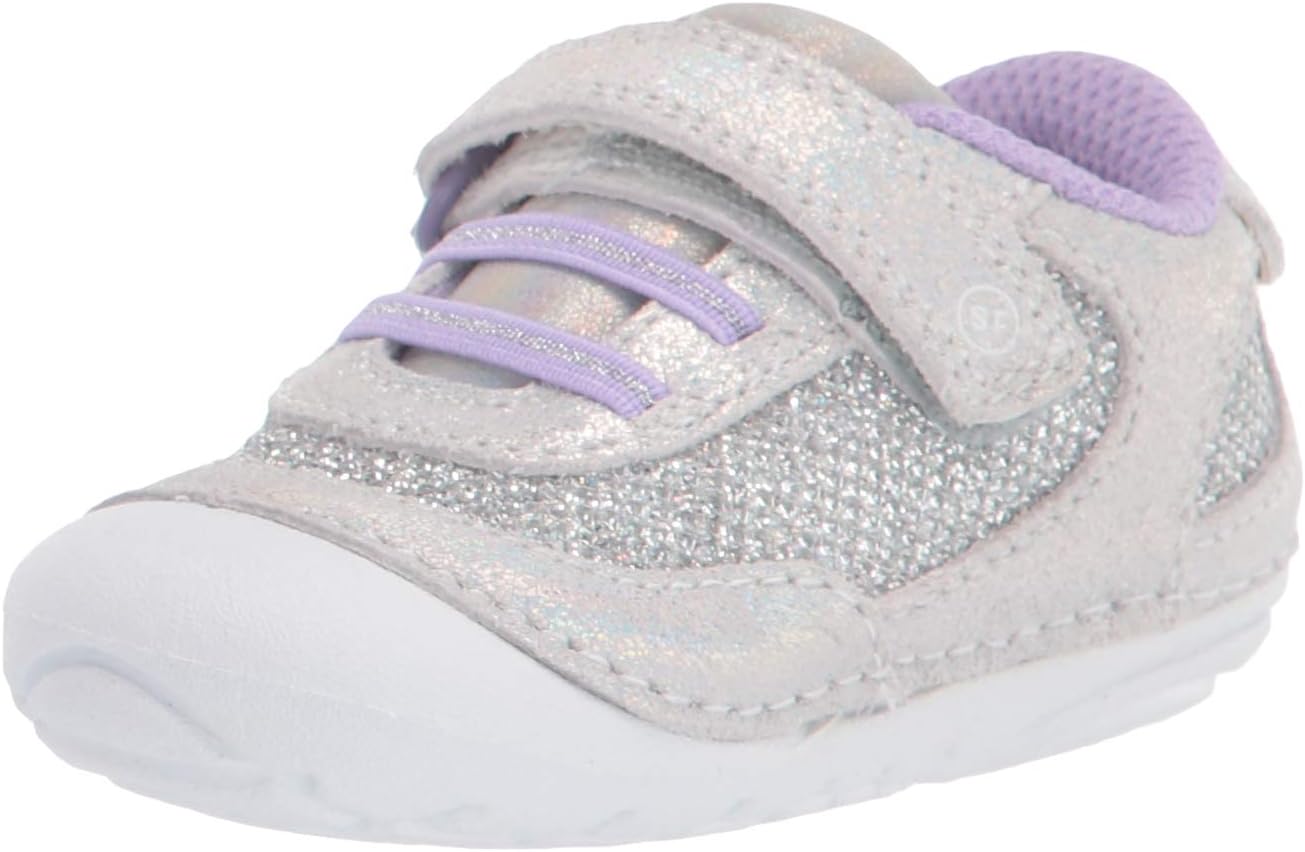
Stride Rite
sneaker · hook-and-loop strap; elastic laces
Amazon link available
Stride Rite
sneaker · hook-and-loop strap
Amazon link availableNo. Many retailers use tennis shoe for a casual court-style sneaker. Check whether the manufacturer actually describes court use, then judge the pair against the surfaces and activities in the child's routine.
A broad contact area can be useful on some smooth surfaces, but stability also depends on fit, tread material, heel hold and how the child moves. The silhouette alone cannot settle the choice.
Possibly, if the facility permits it and the exact shoe fits securely, grips the relevant surfaces and remains comfortable for the full day. Confirm class footwear rules before relying on one pair.
Search the complete brand and model rather than a broad label. Verify the toddler size, closure and selected variation on the detail page because results for sneakers and tennis shoes often overlap.