KEEN
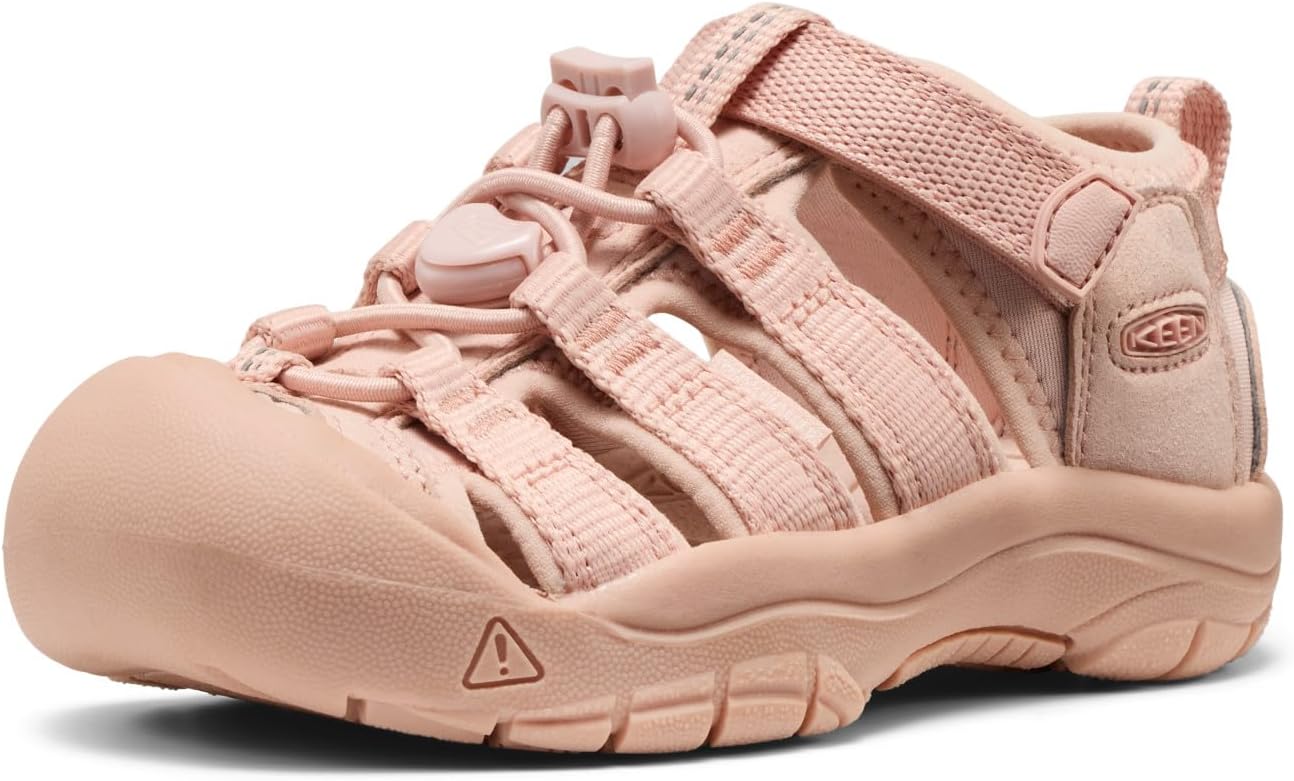
Newport H2 Toddler Sandal
closed-toe sport sandal · bungee laces; hook-and-loop strap
Amazon link availableSeasonal & Weather Shoes
Decide when toddler sandal socks help with the planned route, then refit straps, control seams and moisture, and pack a dry change when needed.
Toddlers can wear socks with sandals when the sandal is designed and fitted for that setup and the combination suits the route. Socks may change skin contact, warmth and moisture handling, but they also take up volume, can bunch and may affect strap position. Test the exact sock-and-sandal combination indoors; do not add socks after approving a barefoot fit.
There are three reasonable starting plans. Barefoot-in-sandal may suit a model intended for direct skin contact on a warm, mostly dry route. Sock-with-sandal may suit a cooler transition, a child who benefits from reducing direct contact with a particular strap, or a setting that expects socks, provided the shoe still fits. Change-later means wearing the sandal one way for part of the day and carrying dry socks or another shoe for the next environment. The best plan follows product guidance and the itinerary.
Do not use a sock to rescue a sandal that is too large, rough or poorly positioned. It can hide early rubbing while the foot still slides. Do not remove a planned sock to squeeze into a sandal that is too low-volume. In both cases, the underlying fit deserves correction. Write down the chosen setup before shopping so measurement and strap evaluation are performed under the conditions that will actually be worn.
Imagine a cool morning walk to library storytime followed by a warmer playground stop. A socked sandal might be comfortable during the walk if the combination fits, but the child may want the socks removed later. That change creates questions: Is there a clean place to remove them? Will the sandal become too loose barefoot? Where will damp or dirty socks go? A second strap setting may work only if it remains within the intended range and is checked again.
Now reverse the route: warm splash play followed by an air-conditioned café. Pulling dry socks over damp feet into wet sandals can retain grit and change friction. A dry shoe-and-sock change may be the more workable transition. These examples show that socks are not a permanent yes-or-no property of sandals. Timing, dryness and refit determine whether the combination makes sense.
Choose a sock that fits the foot smoothly. Place the heel pocket correctly, flatten toe fabric and check that no seam or decorative grip lands under a pressure point. Avoid a sock so long that excess fabric folds under straps or so tight that toes are compressed before the sandal goes on. If the sock has features intended for another type of footwear, confirm they do not interfere with the footbed or upper.
Seat the socked heel on the sandal, then fasten from the most stabilizing part of the upper according to the maker's method. Check every toe, the broad forefoot, instep and heel. The sock increases volume and can move a strap toward the end of its range. If a tab barely catches or the upper pulls out of shape, do not assume the fabric will compress enough later. Compare another adjustment, width, depth or model.
If the sandal will be worn both with and without socks, each setup needs a separate pass. Record where each adjustable strap lands. In the socked setting, confirm there is no compression, bunching or heel lift. In the barefoot setting, confirm the foot does not slide because the strap cannot take up the lost volume. A model that fits in one mode is not required to fit in both. The family may choose one mode or another sandal.
Do not switch settings while the child is standing or walking. Sit, remove debris, smooth or remove the socks, reseat both heels and fasten again. This small reset avoids using the socked strap position for a lower-volume bare foot. Keep the plan simple enough that every caregiver can reproduce it; a combination needing several undocumented tugs is likely to be worn inconsistently.
Socks can absorb moisture, but that does not make a wet sock a protective layer to leave in place. At water play, rain or heavy perspiration, check the foot, sock and sandal. Wet fabric may hold sand or small particles against skin, and open sandals can admit new debris. Remove the system at a suitable stop, clean the foot and footwear as needed and change into dry pieces. Follow the sandal's care directions before returning it to use.
Color or surface dryness does not tell the full story. Feel the toe and heel of the sock and check under straps. Inspect the child's skin for rubbing after a short initial outing. If irritation repeatedly occurs in one setup, stop using that combination and revisit fit or route. Socks should not be framed as prevention or treatment for a medical problem; persistent skin concerns deserve appropriate professional advice.
Some childcare settings, play spaces or activities set footwear rules about covered toes, heel straps, socks or dedicated indoor shoes. Those rules can remove the sandal question entirely. Verify them before building an outfit. A sock does not convert an open-toe sandal into a closed shoe and does not provide the structural coverage of a different design. Likewise, a covered sock does not prove that the sandal is intended for sports or wet use.
Match the sole and upper to the surface and duration. A socked open sandal may work for a calm paved outing yet remain unsuitable for debris-heavy ground. When the day's hardest segment demands a closed everyday shoe, wear that pair and save the sandals for another route. Clothing coordination should follow the footwear job, not override it.
For a mixed day, pack one dry pair of socks in a small clean pouch, a separate bag for damp socks and any dry footwear change the route requires. Add a brief note for another caregiver: sandals with socks for the cool walk, switch to dry indoor shoes at arrival, wet items in the outer pocket. The kit avoids improvising with socks that have collected sand or a sandal whose straps were never refitted.
At home, wash socks according to their label and clean and dry sandals according to theirs. Before repacking, confirm both are fully dry and still fit. Re-measure when strap positions change, toes approach the footbed boundary or the sock leaves new pressure. The decision remains conditional: use socks when the planned combination passes fit and route checks, go barefoot only when that mode passes independently, and choose another shoe when neither does the full job.
Reviewed model starting points
These model families link to Amazon listings. Check the selected size, width and color because availability and features can vary.
KEEN
closed-toe sport sandal · bungee laces; hook-and-loop strap
Amazon link available
KEEN
closed-toe sport sandal · bungee laces; hook-and-loop strap
Amazon link availableThey may take up space, but they should not be used as permanent filler. If the foot slides, rotates or requires extreme strap tightening, choose the correct size or a better shape.
Use the sock appropriate to the conditions and product guidance, then fit the sandal to that exact volume. Thickness words are not standardized, so test the real pair rather than assuming one category will work.
Only if both setups pass separate fit checks and the straps adjust securely within their intended range. Reseat the foot and refasten at every switch; do not reuse the socked setting automatically.
Check the sandal and venue guidance. Wet socks can retain grit and change fit, so inspect promptly and change into dry pieces. A sock does not turn an ordinary sandal into water footwear.