Crocs
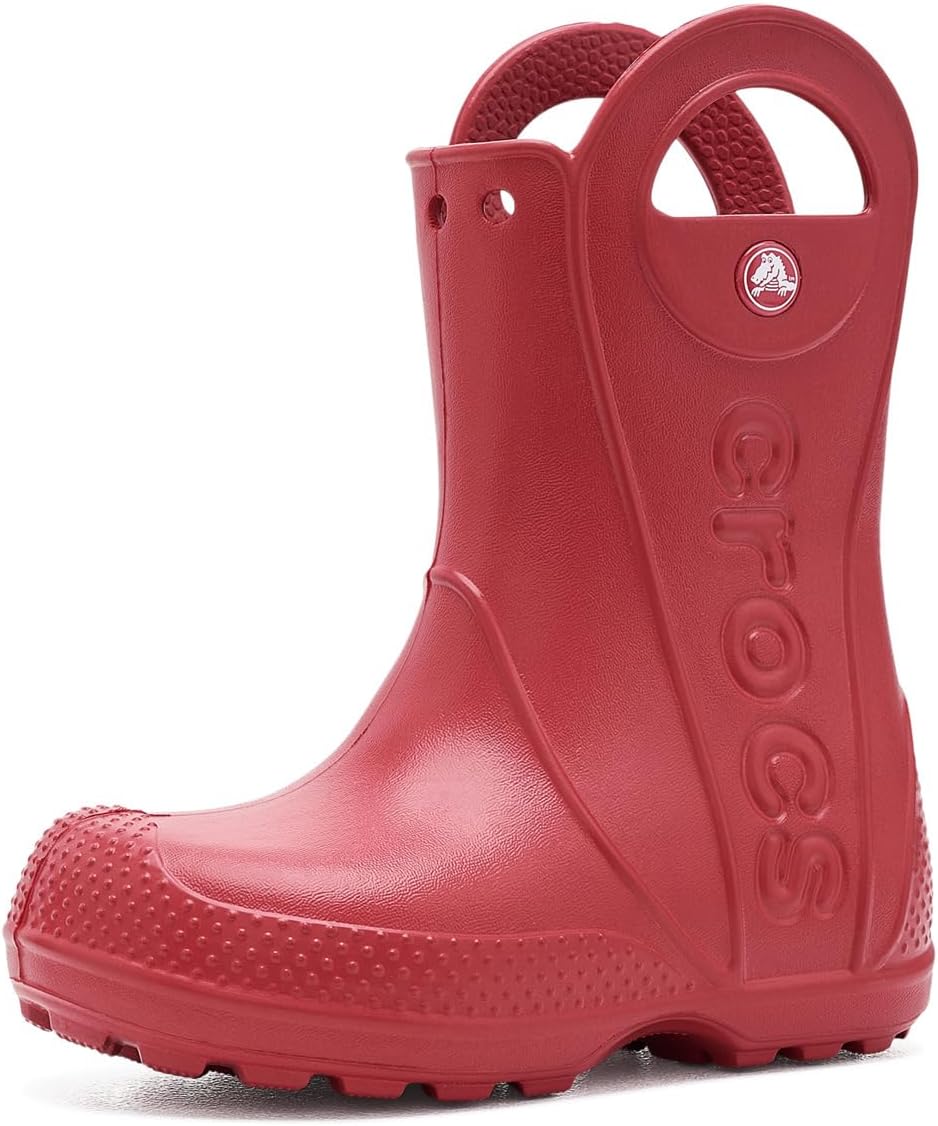
Kids' Handle It Rain Boot
rain boot · pull-on handles
Amazon link availableSeasonal & Weather Shoes
Compare waterproof and water-resistant toddler shoes by exposure, seams, openings, care and the full route instead of relying on a single weather word.
Choose waterproof toddler shoes for exposure the manufacturer explicitly says the construction can block; choose water-resistant shoes when the route involves lighter, shorter moisture that fits the product's stated claim. Neither label is complete without its limits. Openings, seams, tongue design, wear, care and water entering from above can change the result.
Replace “rainy day” with observable exposure. Is the child walking three minutes from car to daycare on damp pavement, crossing wet grass for twenty minutes, or standing in puddles? How high can water reach, and can it enter over the collar? Is the next stop indoors, where a tall weather shoe would stay on? This route description is the standard against which the product claim must work. A strong-sounding label that addresses only the upper material may not cover seams, tongue, opening or immersion.
Water-resistant generally indicates some ability to resist water, but the amount and method are product-specific. Waterproof is a stronger claim, yet it still needs scope. Look for the manufacturer's explanation, construction details and care requirements. Do not assume either word guarantees permanent performance or permits every depth and duration. If a page uses the terms interchangeably or offers no limits, contact the maker or choose a listing that lets you make an informed match.
Imagine water approaching from four directions: falling onto the upper, splashing at the sides, rising around the sole and entering from above. Inspect toe seams, sole joins, stitched panels, tongue edges, zipper paths and the collar. A waterproof material panel can coexist with openings that admit water. Likewise, a low waterproof shoe can lose the contest when a toddler steps into water above its collar. Construction is a system, not the adjective attached to the largest panel.
The child's movement changes exposure. Crouching can pull pant hems up; running can drive splashes toward the tongue; sitting on wet ground can soak areas that ordinary forward walking would spare. Consider whether rain pants overlap the shoe and whether they direct water outside rather than into the opening. This is route planning, not a guarantee. No arrangement replaces supervision or makes water deeper than the footwear's stated use appropriate.
Forecast one is drizzle at drop-off with a covered entrance. A water-resistant everyday shoe may be adequate when its specific claim, condition and walking time match that light exposure. Forecast two is a planned muddy park outing with steady rain and wet grass. A waterproof construction or rain boot may better match, but walking distance, collar height and indoor change plans remain part of the choice. Forecast three is dry weather after overnight rain. The upper may face little falling water while the child encounters puddles from below; outsole, seams and behavior around puddles now matter more than the sky.
These scenarios show why a weather app cannot select the pair. The same percentage of rain can produce different exposure by route and toddler behavior. Make the footwear decision close enough to departure to know both conditions and planned activity. Bring a dry backup when the consequences of wet footwear are high or the claim is uncertain. A backup is a risk-control tool, not evidence that the main pair failed.
Water protection does not compensate for a cramped forefoot, slipping heel or closure that cannot adjust over the intended sock. Measure both feet and use the exact chart. During a clean indoor trial, check toe position, width, instep and heel behavior through steps, turns and a crouch. Weather linings and gusseted tongues can reduce opening space, while tall pull-on designs may provide less fine adjustment. Judge the child inside the complete construction.
Avoid sizing far up to fit thick socks or to extend seasonal life. Excess length can let the foot slide while the toe of the shoe catches. If the regular size lacks sock volume, compare another width, depth or model. Conversely, do not remove needed socks simply to make a weather shoe close. The use setup must be the fit setup. A technically stronger water claim on the wrong shape is not the better purchase.
Mud, abrasion, repeated flexing and incorrect cleaning can affect a shoe's condition. Follow the exact care directions for the upper, membrane, finish, seams and removable pieces. Some products specify a method for restoring a surface treatment; others restrict certain cleaners, soaking or heat. Do not apply a generic spray or home remedy to toddler footwear without confirming compatibility and directions. More coating is not a substitute for inspecting damaged construction.
After wet use, remove loose debris and dry the pair as instructed. Open the closure and tongue so air can reach the interior, but do not place the shoe near high heat unless expressly permitted. Once dry, check seams, sole attachment, lining and closure. A crack, delamination or repeatedly wet interior after within-claim use deserves manufacturer guidance or replacement consideration. Keep claims attached to the shoe's current condition, not its new-box description.
After an ordinary outing that falls within the stated use, remove the shoes and socks promptly. Note where moisture appears: top of toes, side seam, collar or the entire sock. Check whether water may have entered from above or whether sweat and retained warmth are being confused with a leak. Record the route and exposure before concluding that the product claim failed. This observation can help a manufacturer troubleshoot.
Do not invent a bathtub, hose or immersion test unless the maker directs one. Such experiments can exceed the intended conditions, damage return eligibility or provide misleading results. The goal is not to certify footwear at home; it is to use it within documented limits and notice patterns. If dry feet are critical for the schedule, carry a dry pair and socks. Stop the outing when the child is uncomfortable rather than waiting to collect better evidence.
Before ordering, write five fields: exact claim wording, claimed components, exposure limits, care requirements and return or warranty contact. Add fit variables and the route. Compare products on this card rather than placing waterproof automatically above water-resistant. For a short, light-exposure commute, easier fit and all-day practicality may favor the appropriately claimed water-resistant pair. For repeated wet grass or deeper splash exposure, a documented waterproof system may justify a change of type.
Revisit the card when the shoe becomes heavily worn or the child starts using it for a different route. A low shoe purchased for drizzle should not silently become a puddle boot. A tall boot used for mud should not become an all-day indoor shoe simply because it kept water out. The best choice remains conditional: enough documented protection for the route, sound fit for both feet, and a realistic plan to change and dry the pair afterward.
Reviewed model starting points
These model families link to Amazon listings. Check the selected size, width and color because availability and features can vary.
Crocs
rain boot · pull-on handles
Amazon link availableNo. The claim has construction and exposure limits, and water can enter above the collar. Follow the exact maker's stated use; puddle depth, duration and shoe condition still matter.
It may be when exposure is light and brief and the exact product claim supports that use. Consider uncovered walking time, wet grass or puddles, indoor wear and whether dry backup shoes are available.
Water may enter over the collar or through an opening, and interior moisture can have more than one source. Note the location, route and exposure, dry the pair as directed and contact the maker if the pattern repeats within the claimed use.
Only use a treatment the manufacturer identifies as compatible and follow its directions. A generic coating may alter materials, appearance or care, and it cannot repair failed seams, damaged soles or an unsuitable opening.